

Session Notes is a new series from Sound Dissection that drops the needle on a single work. Each interview offers unfiltered access to an artist’s process, influences, and intentions.
Dottie has crafted an album that dances around the listener — a reflection of the daydreams that we all have. Just like a revelation derived from those thoughts, Intention lingers long after the final notes fade.
The recording has a unified sound that is both airy and yet overwhelmingly weighty — a representation of the intimate but universal subject matter addressed in this new work.
As someone who must endure the long and hot Texas summer, it’s easy to understand how Haley Davidson, the sole artist behind the project, was led to create this recording.
However, the weight Davidson conveys in this collection of songs is much heavier than the burden of an uncomfortable climate.
Davidson builds on methods and themes introduced in the project’s three previous albums. However, with a centered presentation and crystal clear direction, Intention is substantial evidence that the artist has mastered these techniques and accomplished the very tough job of creating a balanced and unified vision.
Following successful performances at the Austin music venues Mohawk earlier this year and the Empire Control Room, just weeks after the release of the new album, Davidson took some time to answer Sound Dissection’s questions.
This conversation has been lightly edited for clarity.
❖ ❖ ❖
Sound Dissection: Can we start from the beginning? How did you come to play as Dottie? Do you have a specific artistic thesis that you are working off of? What compelled you to pursue this sound?
Haley Davidson: Music has always been my thing. When I was seven, I saved up for guitar lessons. As a teenager, I was really into hardcore music, but at sixteen, hearing Slowdive for the first time changed everything. It clicked instantly. It felt more like “me” than anything I had ever experienced. I started picking up the same gear Slowdive used (Roland JC120 and Yamaha FX500) and began making music on my own.
At the time, I was in a relationship with someone who told me I wasn’t good enough to be in their band and that “shoegaze was boring.” I didn’t release anything until I moved from North Dakota to Austin and started playing with The Sophies, a group of women I met on Craigslist. Being in that band gave me the confidence to do more and more on my own.
You have released a lot of music in a relatively short period. (Let me know if I am wrong) Two full albums in 2020; another in 2022. A standalone single in 2023; an EP and two standalone singles in 2024, and now Intention. Not to mention everything before that. How do you remain so prolific? Do you have a writing process and schedule that you stick to?
That’s right. My earliest releases weren’t planned or meant to be “albums.” They were more like collections of singles while I was still learning the ropes. Dottie is my outlet, how I express my emotions, and who I am. Songs tend to spill out of me. I will write a guitar part, and when I find another part to go with it that hits deep or makes me cry, that’s a Dottie song. There’s no schedule. It happens when it needs to.
How does a song begin for you? Do lyrics come first, and then the composition? Do you start by chasing sounds?
I usually start by writing guitar parts that fit together and fully lay out and record the song before adding lyrics. That way, I can write words that fit the entirety of the track. I also keep a journal of poems and potential lyrics, so if I don’t have fresh words in mind, I draw from that to find lines that feel right.
After working through your catalog, Intention feels like the culmination of all your work up until now. Is that a correct interpretation? What is this new album to you?
It is. Each release teaches me something and brings me closer to myself. Every record reflects the period of my life it was made in. My first compilations came from a place of youth and joy, as I finally felt free to release music and perform. While working on an unreleased album called Good Thing, I was diagnosed with stage 4 breast cancer. After receiving the diagnosis, I scrapped that project and made Thief instead, a record about treatment, the loss of health and self, and losing a friend to the same disease. After treatment, I had the brutal realization that my life would never return to what it was before. Since then, my music has been about navigating hardship, disappointment, and uncertainty.
Thank you for being so open with us. Can you share some insights into the new album and its meaning? After listening to Intention a few times and reading the song titles over and over, I get the sense that you are investigating femininity. Am I on the right track?
I do resonate deeply with my femininity. It’s something I am proud of and feel should be more valued and supported in the shoegaze world. I think it naturally comes across in my music, but is not the main theme.
Intention is about alienation and feeling less and less human. It’s about wanting the best for others in a cruel world, and how years of pain can leave you isolated. It’s about coming to terms with that feeling, and in the process, comforting myself. The lyrics are mantras and words I have always wanted to say to myself or others.
Can I ask you why these subjects are at the forefront of your work at the moment? What is compelling you to make music that addresses this cruelty and isolation?
I’m generally a positive person and don’t usually get too personal, but music gives me a space to release the heavier feelings I keep to myself. Songwriting is my way of letting go of what still weighs on my mind, and putting those emotions into music helps me process and transform them.
I mentioned this when I first listened to “Pure,” but this new album feels especially ethereal, combined with this sense of heaviness from the distinctive drone. Was that intentional? Can you share some thoughts on the sound of the album in general?
Yes, I wanted it to feel as heavenly as possible, while leaning into a classic shoegaze sound. Each track has many layers of guitar, mostly drenched in heavy reverb with subtle layers of distortion woven in. When blended together it makes a new sound, like one big wave, creating a floating sensation for the listener.
Can you offer some insight into the production process? Did you record in a studio here in Austin or elsewhere? Did you record at home?
I record everything at home with Logic and a simple setup. I think everyone should try it. Recording yourself makes you better over time, and you don’t need much to start. I also love having full control to shape the sound exactly how I feel it should be.
When recording, what kind of tools are you using in your setup?
When I record, I use my live pedal setup which is mostly layers of reverb, and then I add even more reverb in Logic. It keeps everything close to how I play live, just a little more exaggerated in the mix.
The majority of your song titles are a single word. Is that intentional?
I do prefer it. A single, clear word usually feels right and can often say more than a phrase.
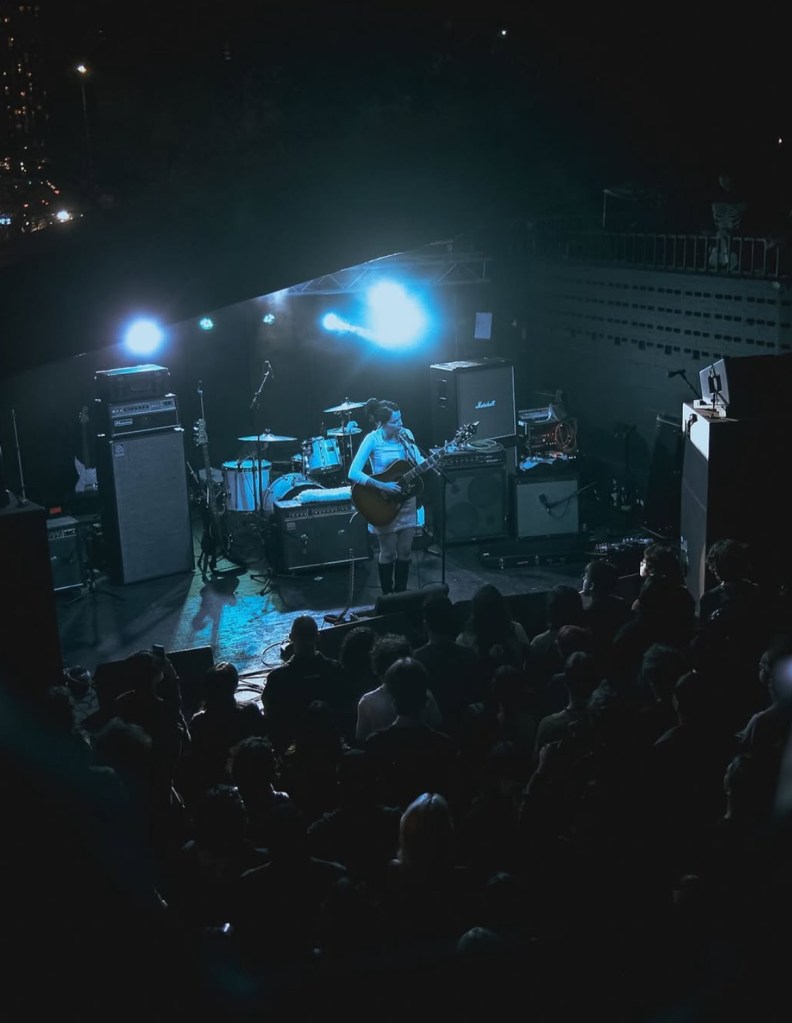
You just played at Mohawk here in Austin. What did you come away with from that performance?
Mohawk was my biggest show so far and felt like a full-circle moment. I’ve been going to shows there for the past 11 years, so stepping onto that stage was unreal and such an honor.
As a listener, I found all your music, but Intention especially, to be a very meditative process. Is it the same for you as you play these songs?
Absolutely. Playing or listening to my own songs transports me. It’s how my deepest feelings sound, and I love that others can feel it too.
It’s just you are on stage with an acoustic guitar at the live shows. Can you offer some insight into your setup during performances?
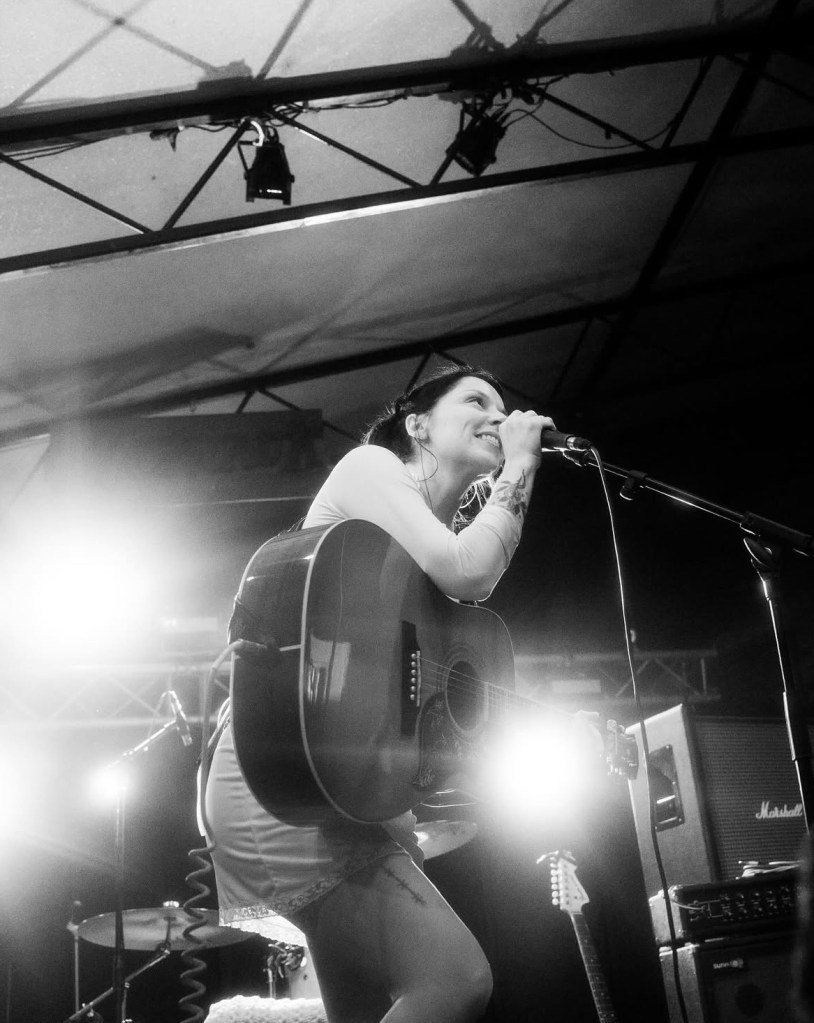
Right now, it’s just me and an acoustic guitar, but I have a few ways of translating full-band songs on my own. For tracks with drums, I play to a backing track; without drums, I live-loop guitar. Lately, I have really been loving the acoustic for live shows. It has a distinctive sound you can hear in my recordings, and up close, you can hear the strumming, which adds a really nice layer.
What compels you to share this music with an audience, and what do you hope listeners get out of it?
Music lets me say what I can’t in life. It’s everything inside of me, turned into sound. If it moves someone, I feel understood. If it helps them, that’s the greatest gift.
