
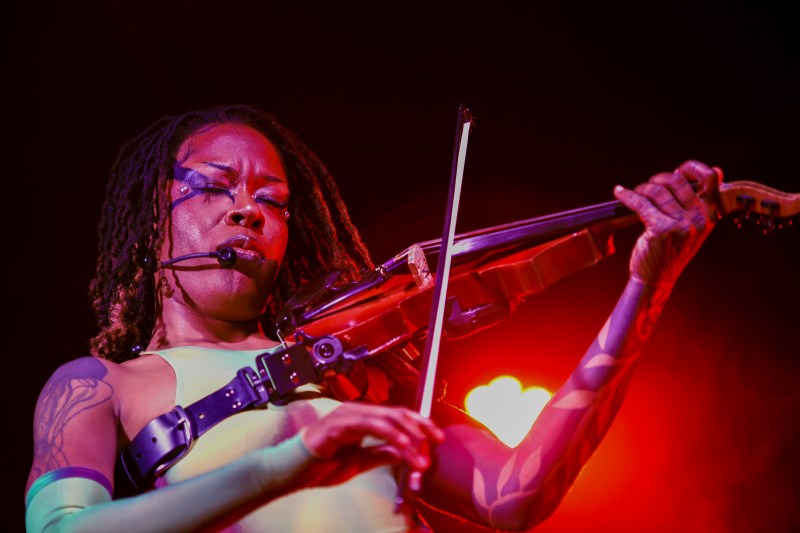
A wave of anticipation overtook Radio/East’s backyard atmosphere as the bright lights of the stage dimmed to a deep red.
The sound of birds chirping enveloped the stage and swept through the crowded Austin, Texas, venue as Sudan Archives took to the stage in a green skin-tight bodysuit. Carefully stepping onto the stage as if uncovering an undisturbed archaeological site, the performer approached a computer console topped with a vintage monitor encased in a clear plastic shell — a visual homage to the artist’s ties to the rave culture of the 1990s and early 2000s.
A landscape of clicks and sweeping textures followed for a moment before the sounds gave way to the artist’s own violin.
And then the show began.
Sudan Archives’ presence is palpable. Her command of the stage is unprecedented. Her ability to sustain the audience’s attention is enviable.
The artist, Los Angeles-based, Midwest-raised Brittney Denise Parks, waltzes across the stage as if she were directing orders to a grand army. Accompanied by appropriate sound effects to complete the illusion, she wields her bow and violin like a sword and shield.
With a quiver hanging from her back as she fastens the violin to her form, the transformation is complete.
Sudan Archives is a warrior.
That was made clear through the entirety of the artist’s set — a rather eclectic and masterful collection of songs that combine elements of R&B, hip-hop and electronic music, among others. Her set is a collection of compositions that take from these traditions but do not entirely belong within the confines of any of them. The natural conclusion: This must be the sound of the future to come.
And given how enthralling it is, that is a very exciting proposition.
Without a backing band and working solely with a network of looping tracks and other tools, this was entirely a one-woman show. Each of the set’s songs, surgically measured to seamlessly transition from one to the other, combined with carefully choreographed movements, ensured Sudan Archives’ capacity to not only fill the space but to influence and transform the energy of this outdoor venue.
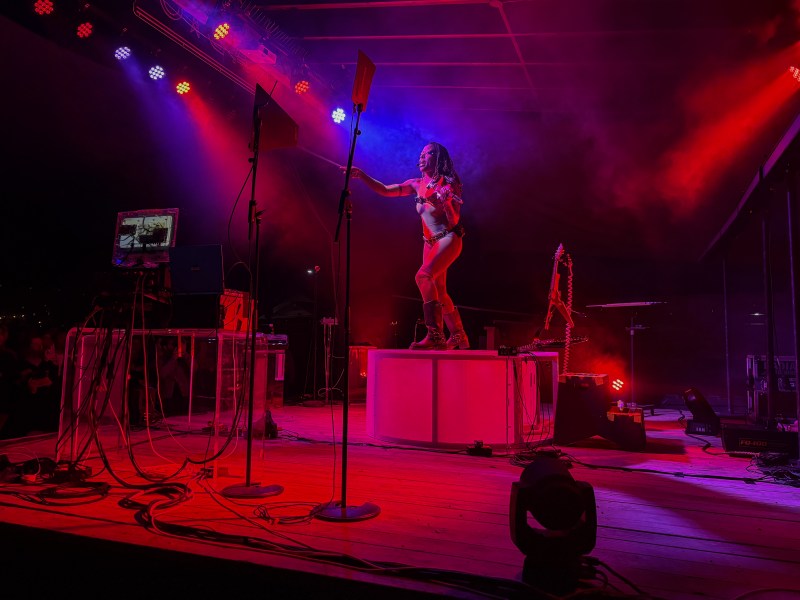
The majority of the night’s focus was held on Sudan Archives’ latest release, The BPM, an astonishing collection of punchy club rhythms that blend a Detroit-influenced electronic music sound with the artist’s eclectic violin technique.
Just like her previous two full-length albums, the album was released by Stones Throw Records, a Los Angeles label known for shepherding genre-blending underground music and prioritizing artistic freedom.
Based on the crowd’s reaction, this new collection of self-investigating dance-club tracks, which was released last October, is propelling Sudan Archives into a new, grittier direction, and it is a move that has rewarded the artist with more attention.
The audience’s energy was palpable during the performance, with many singing along to every song.
About midway through, the artist welcomed a fan from the front row to dance atop a podium towering above the center of the stage. It was a powerful moment of an artist recognizing and offering appreciation to their support.
She also shared her appreciation for Austin and its music community.
“I love it,” Parks said. “I wanna move here. Can I move here?”
Her remarks drew enthusiastic applause.
“So many great things have happened because of the shows I have played out here,” Parks added.
As the performance continued, the rather stagnant assembly began to dance, finally giving Sudan Archives’ music the context that it so seems to yearn for and encourage.
As the final three songs of the set were played, all inhibitions faded away as movement traveled through the audience just as waves signal a coming storm.
It was a beautiful conclusion to the night. And as the performance came to a close, it was clear that this artist’s work was a success.
