
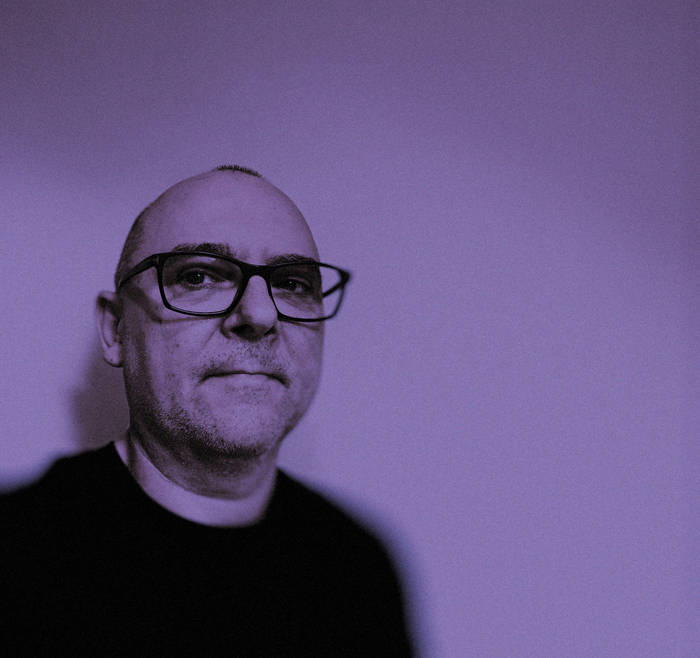
Despite implying ascension, Airward, the latest release from author and Australia-based artist Sean Williams, provides a sonic landscape for deep introspection.
The project, issued under Williams’ long-running musical pseudonym, thadelaidean, is a series of sustained, droning breaths from the artist’s synthesizers that sweep across the album and the listener’s consciousness.
Williams has penned a vast number of science fiction and fantasy books, including a number set in the Star Wars universe, in addition to the author’s celebrated Twinmaker and Troubletwisters series of novels. But as a composer of ambient electronic music, Williams creates spaces in which the world-building and symbolism are carried by the listener.
Rather than building a world outward, thadelaidean calls on the listener to consider their own interiority and the deep complexity and vastness held within it.
Released Aug. 21 through the introspective ambient and electronic music label Projekt Records, these sounds, inspired by the album’s cover art, provoke images of impressive storm clouds dancing across an expansive sky.
Those storm clouds make their most prominent appearance with the dissonance introduced on “Invisible Wheels of Night,” the second piece of the 55-minute recording.
As the storm takes place overhead, it is difficult for the music not to encourage the listener to consider the howling weather within themselves.
The listener is then further encouraged to address the Sturm und Drang of contemporary existence with “Interplanetary Time.”
The piece, a collaboration with Lauren Jones, shifts between moments of musical tension and peace, offering space for further contemplation of life’s complexities.
This prolonged reflection — a likely catalyst for the release of unwanted cortisol — is then rewarded by the artist with the peaceful “Dreaming Starlight.”
The piece is a celestial stroll of drone and synthesizer swirls.
A collaboration with Peter Allen, the it conjures images of a cloudless night sky, filled with stars and accompanied by the pulsing waves of an aurora.
The conflict and stress return with less emphasis in “Sleepers in Motion,” with its reparative, pulsating core that builds and builds throughout the piece, opening the listener to visions of points of conflict and resistance, from the intricacies of daily life to existential realities.
The more than 25-minute work, centered by the pulsating rhythm, brings the mind to a meditative state — encouraging it to forgo awareness of time and allow thoughts to journey well beyond the space they are usually provided.
In direct conversation with the album’s opening overture, “Rising Endless,” the recording’s final piece, “All Things Forever,” brings the project to a close, gently encouraging the mind to return to the senses of the present with a grounding hum ornamented by ethereal swirls from a synthesizer that serve as a reminder to always keep a portion of themselves high above in the clouds of thought.
Although the music leans inward for the listener, the undertaking is most significantly inspired by external experiences, specifically the act of taking a journey and exposing oneself to unacquainted environments.
“My compositional process is slow, sometimes,” Williams stated. “I first started working on these tracks when I was based in Tokyo 18 months ago. Probably because I was away from home and journeying around Honshu, the early versions of these pieces evoked travel in a number of different ways, and over subsequent iterations that flavour came out more strongly.”
