Iain P. Ross is deeply intrigued by the spaces between and the forces unseen.
The Glaswegian musician and sound bath artist behind the meditative synthesizer-focused project Effective Dreaming unveiled their latest album, The Spring Eternal, on Oct. 31 – Halloween.
The release date is rather appropriate, as the now widely commercialized holiday has deep ties to the ancient Gaelic tradition of Samhain, still a very much observed event in Ross’s native Scotland. Pronounced sow-in or sah-win, Samhain is a festival that marks the end of the harvest season and bodes the beginning of winter.
It is the moment when the veil between the physical world and the Otherworld, occupied by ancestors, spirits and deities, is at its thinnest. Bonfires, offerings, guises and divination are all traditional practices tied to the festival, all with the intention to welcome visiting ancestors, appease spirits, ward off mischievous phantoms and gain and carry out rituals to seek knowledge as the two worlds intertwine.
The ancient holiday tradition offers an instant of clarity and awareness to one’s physical and spiritual surroundings. That intention to seek knowledge, understanding and greater consciousness is held deeply within the creative core of The Spring Eternal.
The album, just over a half hour in length, consists of six long-form compositions, offering a meditative consideration of both conceptual and physical presence.
The Spring Eternal challenges listeners to engage more attentively with the external world and the complexities of their own interiority, and perhaps most vitally, celebrate in the state of being.
In the wake of the new album’s formal physical release on Austin-based record label Aural Canyon, Ross took some time to answer Sound Dissection’s inquiries on the freshly unveiled work.
This conversation has been lightly edited for clarity.
❖ ❖ ❖
Sound Dissection: I have been sitting with The Spring Eternal for several listening sessions now, and I find it to be very peaceful. You are describing this recording with the impactful phrase, “The bad news is you’re falling. The good news is there’s no ground…” How did that concept come about? Did the idea predate the compositions themselves?
Ross: That line is a quote from Chögyam Trungpa, a Tibetan Buddhist teacher who was one of the first to visit the West in the 1960s. I first came across it many years ago and it’s bounced around my head since then. Like any such spiritual saying, it points towards a certain experience or at least the possibility of such an experience. What it points to is the same I am trying to point to with the name The Spring Eternal and which I hope the listener might encounter playing the album, that’s maybe something of the peace you described feeling.
There’s a movement inherent to that Trungpa statement. First there’s a kind of vertigo, almost an acceleration as your mind wrestles with the idea of groundlessness. This is where my last album Dream Catalogue Vol.1 (Fluere Tapes, 2025) was coming from where it very much dealt with transience, decay and constant flux. The music was made up of lots of short, ephemeral vignettes which would surface and dissolve into one another whilst the cassette sleeves I made by hand out of actual copper sheet corroded with ammonia into a patina.
With this album something started to change, if there’s nowhere to fall to then falling begins to lose its meaning as its relational quality dissolves. What remains is something stable but incredibly, vastly alive. The Spring Eternal – the never-ending source of all things that is always already present but hidden just beneath the threshold of our own fear and grasping.
These ideas aren’t new of course; people have been pointing towards this experience in all sorts of ways for centuries, using terms like “presence”, “the now” and many others. This is simply my attempt to articulate something of that experience as it’s appeared in my life and creative practice. None of these ideas are necessary for listening to the music. In that sense, the album isn’t really “about” anything. The ideas are just pointers.
Did you set an overarching goal when crafting The Spring Eternal? If so, do you feel you accomplished that goal?
I tend not to start with a set goal when I’m working. I work a lot with improvisation. I’ll experiment with sounds and processes until something moves me and begins to suggest itself and then try to follow that. I think creativity and channeling are basically the same thing. My goal when I’m making music is just to try to let whatever comes through me find its form as fully as possible. That means not just the music and production but also the physical form it finds in a medium and how it exists socially also. This is something I’ve become quite fascinated with recently, how the creative act doesn’t stop at the manifestation of a physical object but carries on in myriad ways through how it is contextualised and received by society, continually changing and defining what that object is. As for The Spring Eternal, I’m happy with how this material has come to be in the world on all levels.
Can you describe the writing process for The Spring Eternal? Are these a series of improvisations or experiments that have been arranged to form an album? Do you start with a master vision and an outline for each piece and the album as a whole?
For this album I enjoyed experimenting with making spaces I could inhabit in which things could then happen, kind of creating the conditions for an experience. These would prompt improvisations as I was moved and then I let the shape of the album form itself out of the material coming through. I work very intuitively and find that my intellectual understanding of a project often lags far behind my intuitive understanding. It is often not until quite some time later that I begin to understand my decisions and the connections between things. Once I had the raw recordings, a sequence began to suggest itself, and I would go back and rework tracks informed by that arc and the other tracks, then repeat until I was satisfied.
What compels you to make music in the ambient and new age traditions? Do you feel you are able to communicate something that you cannot in other forms?
I wouldn’t say I set out to make music in these traditions, or any tradition really. I think it’s more likely that there are certain shared predispositions and preoccupations among people making these kinds of music, and that the similarities in the music emerge from that. I sometimes make radically different kinds of music for fun, depending on how I’m feeling, but I’m aware that I tend to be most drawn in this direction, both as a listener and a musician. I think it’s a bit like cooking. You make the kind of food you feel like eating, something that will nourish and satisfy you. What that is depends on your tastes, experience, your makeup, and what you happen to need at the time. I think making music is often something similar. You’re trying to create an experience that you yourself want, or maybe need, to have.
I’m drawn to music that brings me into a particular relationship with the present, and that can happen in all sorts of different styles. I love spiritual jazz, folk and classical music, for example, and there’s plenty of ambient and new age music that doesn’t move me at all. My favourite records invariably are the ones that seem to touch on several of these traditions whilst also transcending their boundaries altogether.
Especially with “A Boundless Net Of Celestial Jewels” and “I Am A Stranger In This World,” I sense that you are pulling from Hindu and Buddhist philosophy, considering the metaphor of Indra’s Net that offers deep interconnectedness and mutual dependence, alongside Christian scripture, with the latter title referring to our temporary presence and existence. Is this project a means to address or consider faith, spirituality, and religious tradition?
Not in any intellectual way no. The titles came after the music. I do find though that these traditions often have a highly refined poetic language to articulate a certain phenomenology of experience. So it’s more borrowing from that rich language to point towards experiences that I felt were associated with the music and to hopefully enrich it with a layer of poetry.
The album title carries a lot of established cultural weight around hope and optimism for a brighter future, from Alexander Pope’s 1732 poem, “An Essay on Man,” to more contemporary jazz and art-pop albums by William Doyle and Jack Wyllie. Is your work in conversation with these other artistic undertakings?
Not really, actually. Hope, to me, would be something preventing one from entering the spring, as it places fulfilment in the future rather than here, now. In The Spring Eternal, one needs no hope, as everything is already here.
On a more technical level, can you share what tools and instruments you use to make and record this album? (Are these digital or analog synthesizers? Did you record at home or in the studio? What recording tools and techniques did you use to capture these performances?)
I actually got my first little studio this year, but The Spring Eternal was recorded before that in my home studio. Most of it was recorded straight to cassette. I love the physicality and texture of cassette but also especially how it limits you to a performance and gesture. It grounds the act of recording in something physical, which, with something as intangible as music, I think can be very helpful.
The album was made with hardware. Mostly analog synthesisers, a couple of cheap Behringers (Kobol and Pro-800) along with a Moog Grandmother and various outboard delays and reverbs, etc. The one digital synth I used was a Yamaha YS100, which is a weird 4-operator FM synth from the 80s with a massive volume knob. It was designed as a kind of home keyboard but has quite a powerful FM engine inside it, which is only really accessible via a computer editor. I bought it years ago very cheap, as I needed a keyboard for some live shows, but since then I’ve loaded it up with lots of custom patches and love it.
I took the recordings and did quite extreme mixes (sometimes several passes) back through the desk and outboard effects onto cassette again. I really like manipulating EQ, saturation, compression and reverb whilst mixing as a further stage of composition, kind of pushing and shaping the energy of the tracks in weird ways.
Is there an instrument or piece of equipment that is essential to the sound of The Spring Eternal?
For this record, I really liked the pairing of the Moog Grandmother with the Behringer Kobol. The Grandmother really has that warm, organic Moog character. It’s so big and round and warm-sounding, whilst the Kobol is so thin and kind of frail in a way I find really beautiful. I found they complemented each other really well.
You also include some field recordings on The Spring Eternal. What compelled you to include that additional layer into the music? Do the places where you made these recordings hold specific significance to you or to the pieces they appear in?
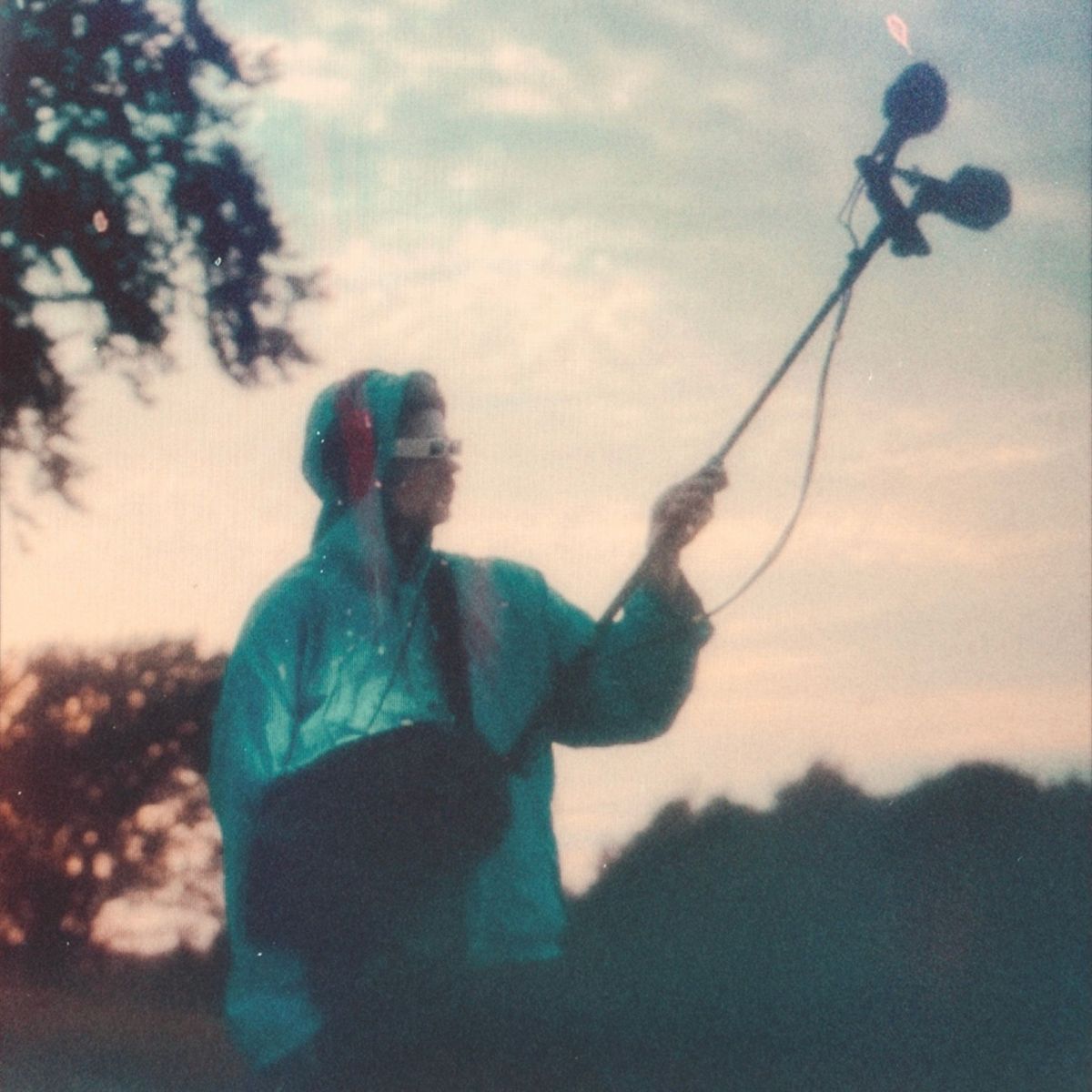
Yes, definitely; they are all recorded in special places to me. Places in the countryside around Glasgow I visit often. It feels really good for me to pull the energy of those spaces into the music. Part of that is personal; it inspires me as I’m working on the music, but I do think that something of the energy of those places, as well as my feeling for them, reaches the listener also.
I also really like how adding field recordings has the effect of subtly providing some distance from the music itself. When I was younger, I used to love intense music that took me out of myself and fully absorbed me. Nowadays, I increasingly appreciate music that kind of meets me where I am and which I can share a space with rather than being overwhelmed by. I think it comes back to the presence thing again. I guess it’s quite close to Eno’s “ambient” thing, which I think is often mischaracterised as being a lot more passive than he intended, but for me it maybe feels more like a rebalancing of agency or something. Well-placed field recordings definitely encourage a more equal relationship by slightly decentring the music.
You mentioned the album was recorded in Glasgow in the winter of 2025. Do you feel that the place and time of year a project is recorded dramatically impacts the creative process? Have you experienced this?
For sure. I think most creative people are inherently pretty sensitive, so inevitably those things impact how you are feeling, which then comes through in the music. Glasgow has a pretty brutally long, dreary winter which can be quite tough. The upside is that spring feels pretty magical when it arrives. It was at the end of winter that I was working on the album, and there were already the first signs of spring, and I feel like you can hear that in the music.
